
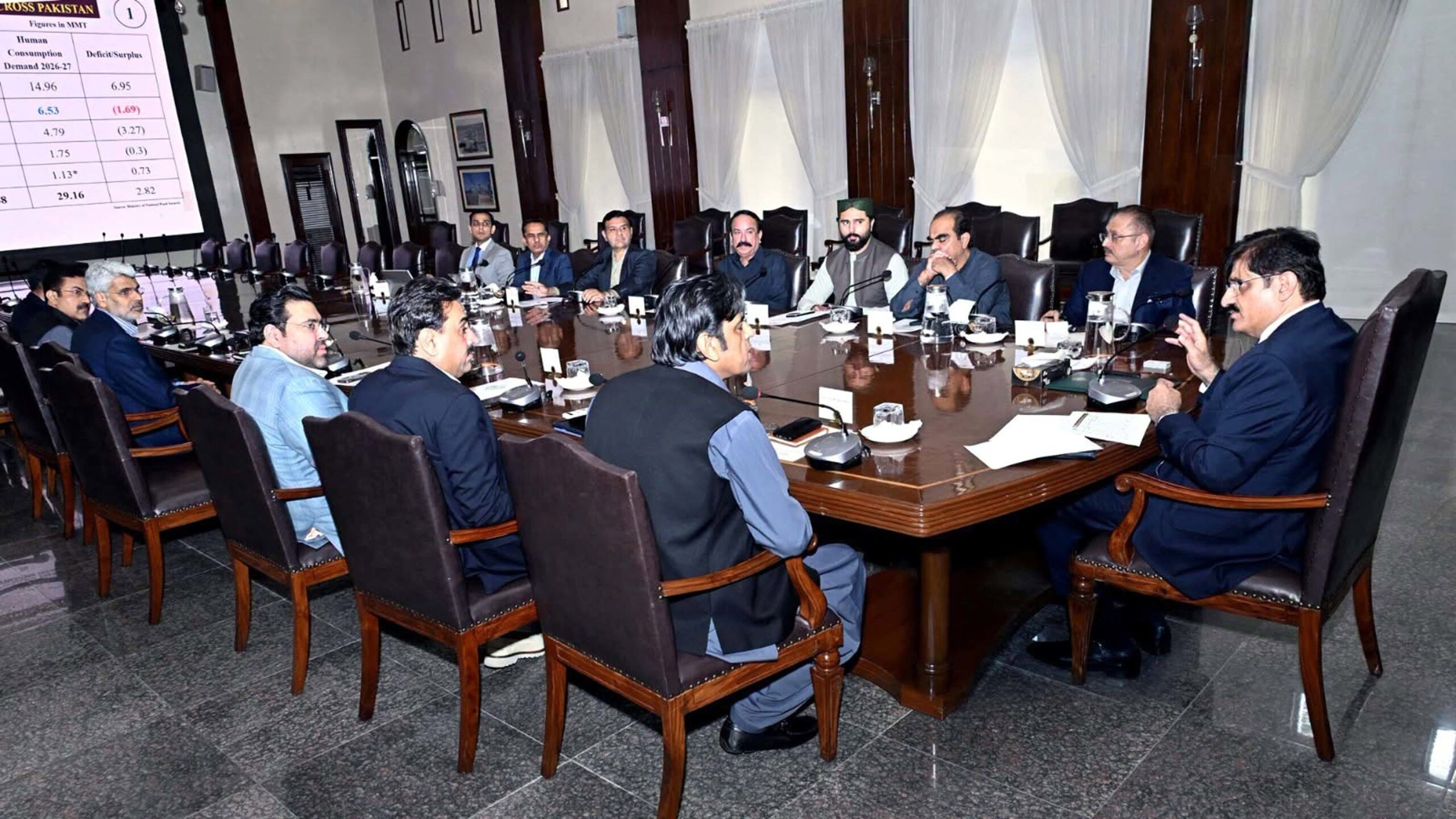
KARACHI: Sindh Chief Minister Syed Murad Ali Shah on Thursday directed authorities to intensify action against hoarders and profiteers and formulate a comprehensive supply strategy after officials warned that the province could face a wheat deficit of approximately 2.11 million metric tonnes (MMT) by March 2027.
Chairing a high-level meeting at the Chief Minister House to review wheat stocks, consumption patterns and future requirements, Murad said the government would take all necessary steps to ensure the uninterrupted availability of wheat and flour and prevent artificial shortages.
Officials from the Food Department told the meeting that Sindh would require around 4.35 MMT of wheat between July 15, 2026, and March 15, 2027. Against an estimated availability of 2.24 MMT, the province is projected to face a shortfall of 2.11 MMT.
According to the presentation, Sindh”s total wheat availability for the 2026-27 period stood at 4.84 MMT, including 4.7 MMT produced during the 2025-26 season and 140,000 metric tonnes carried forward from previous stocks. By mid-July, approximately 2.60 MMT had already been utilized, including 1.90 MMT for consumption, 0.50 MMT moved outside the province and 0.20 MMT retained as seed.
The chief minister noted that nearly 610,000 metric tonnes remained unaccounted for and could be concealed within the supply chain. He instructed the Food Department and district administration to step up enforcement measures to recover hidden stocks and maintain market stability.
The meeting was informed that anti-hoarding operations had so far recovered 172,020 metric tonnes of wheat, contributing to improved market supplies and lower flour prices in several districts.
Food Department officials said current visible stocks totalled 1.23 MMT, comprising 81,812 metric tonnes procured by the department, 172,020 metric tonnes seized during enforcement drives, 0.48 MMT held by flour mills and 0.50 MMT retained by growers for personal use.
Murad said wheat remained a strategic commodity closely linked to food security and public welfare, adding that negligence in maintaining adequate reserves and stable prices would not be tolerated.
To address the projected deficit, officials said the Pakistan Agricultural Storage and Services Corporation (PASSCO) had offered 220,000 metric tonnes of wheat at Rs4,150 per 40 kilograms from storage facilities in Khairpur, Naushahro Feroze, Shaheed Benazirabad and Sanghar. Even after accounting for the offer, the province would still face a shortfall of around 1.89 MMT.
The Food Department proposed additional allocations from PASSCO, facilitating wheat supplies from Punjab and, if necessary, importing wheat to bridge the gap.
Murad directed the Chief Secretary to intensify anti-hoarding and anti-profiteering campaigns, ensure accurate reporting of wheat stocks held by traders and millers, and submit fortnightly updates on procurement, stock levels and market trends.
“There is no immediate shortage of wheat in the province,” the chief minister said. “The government is closely monitoring stock levels and market conditions and will ensure the uninterrupted availability of wheat and flour at reasonable prices.”
He added that food security remained one of the provincial government”s highest priorities and urged all relevant departments to work proactively to prevent any disruption in wheat supplies during the coming months.
The meeting was attended by provincial ministers Sharjeel Inam Memon, Mukesh Chawla, Jam Khan Shoro, Makhdoom Mahboob Zaman and Muhammad Bux Khan Mahar, along with Adviser Gianchand Israni, Chief Secretary Asif Hyder Shah, senior bureaucrats and officials from the Food and Agriculture departments.